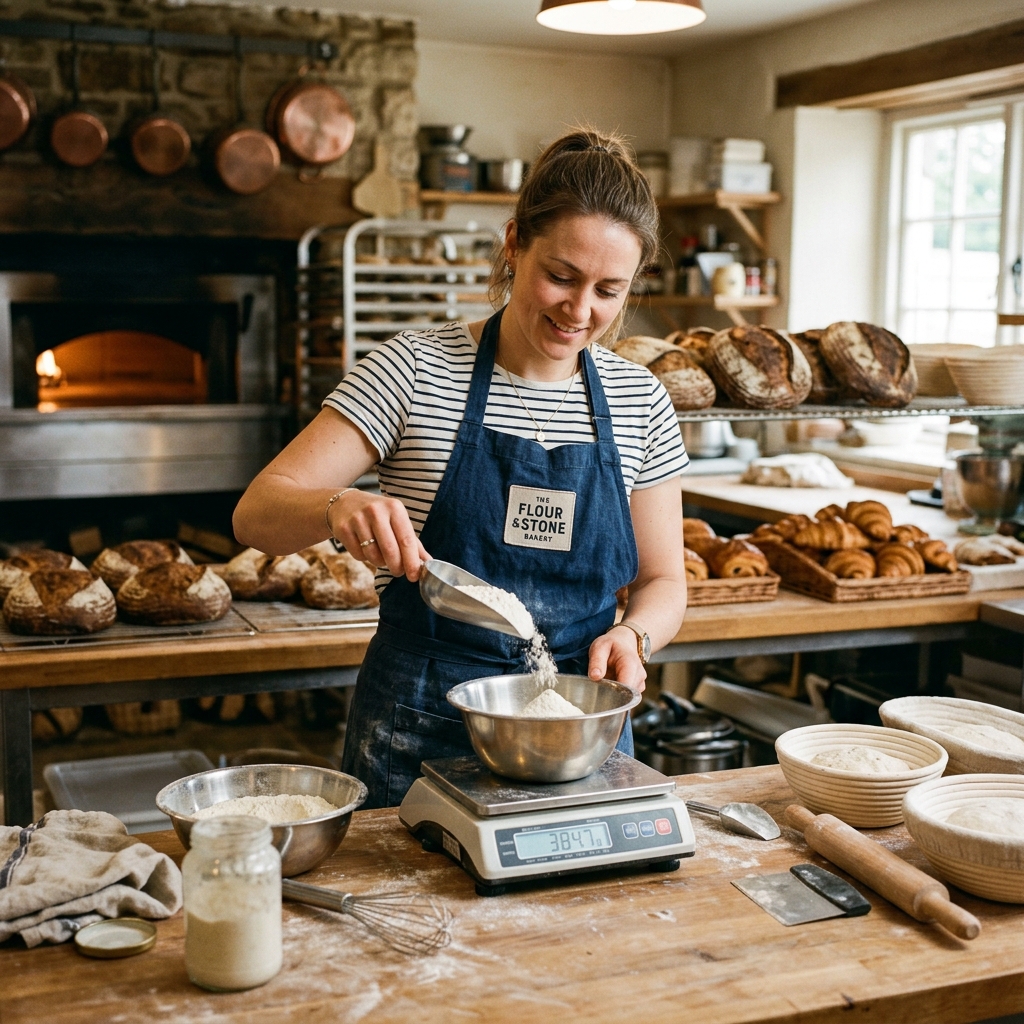
The Professional Secret
Walk into any professional bakery, and you won’t find a single measuring cup. Every recipe is written in grams. Why? Because precision is everything when you’re making 200 croissants that all need to be identical.
5 Reasons Grams Win
1. Eliminates Human Error
With cups, how you scoop matters. Two people measuring “1 cup of flour” can get readings anywhere from 110g to 150g. With a scale, 120g is always 120g.
2. Humidity Doesn’t Matter
Flour absorbs moisture from the air. On a humid day, a cup of flour weighs more than on a dry day. Grams don’t care about the weather.
3. Scaling Is Simple Math
Need to triple a recipe? Just multiply: 250g × 3 = 750g. Try tripling 1⅔ cups in your head without a calculator.
4. Fewer Dishes to Wash
With a scale, you can add ingredients directly to your mixing bowl — zero measuring cups to wash. Just hit “tare” between ingredients.
5. Global Recipe Compatibility
A recipe from Paris, Tokyo, or Sydney using grams works exactly the same everywhere. No conversion needed.
Should You Ditch Cups Entirely?
Not necessarily. Cups are great for casual cooking where precision isn’t critical — soups, stews, marinades. But for baking, where chemistry matters, grams are the way to go.
The good news? A decent digital kitchen scale costs $10-20 and lasts for years. It’s the single best investment you can make for your baking.
The Compromise
If you don’t have a scale, use our grams to cups converter with ingredient-specific densities. It’s the next best thing to weighing your ingredients.