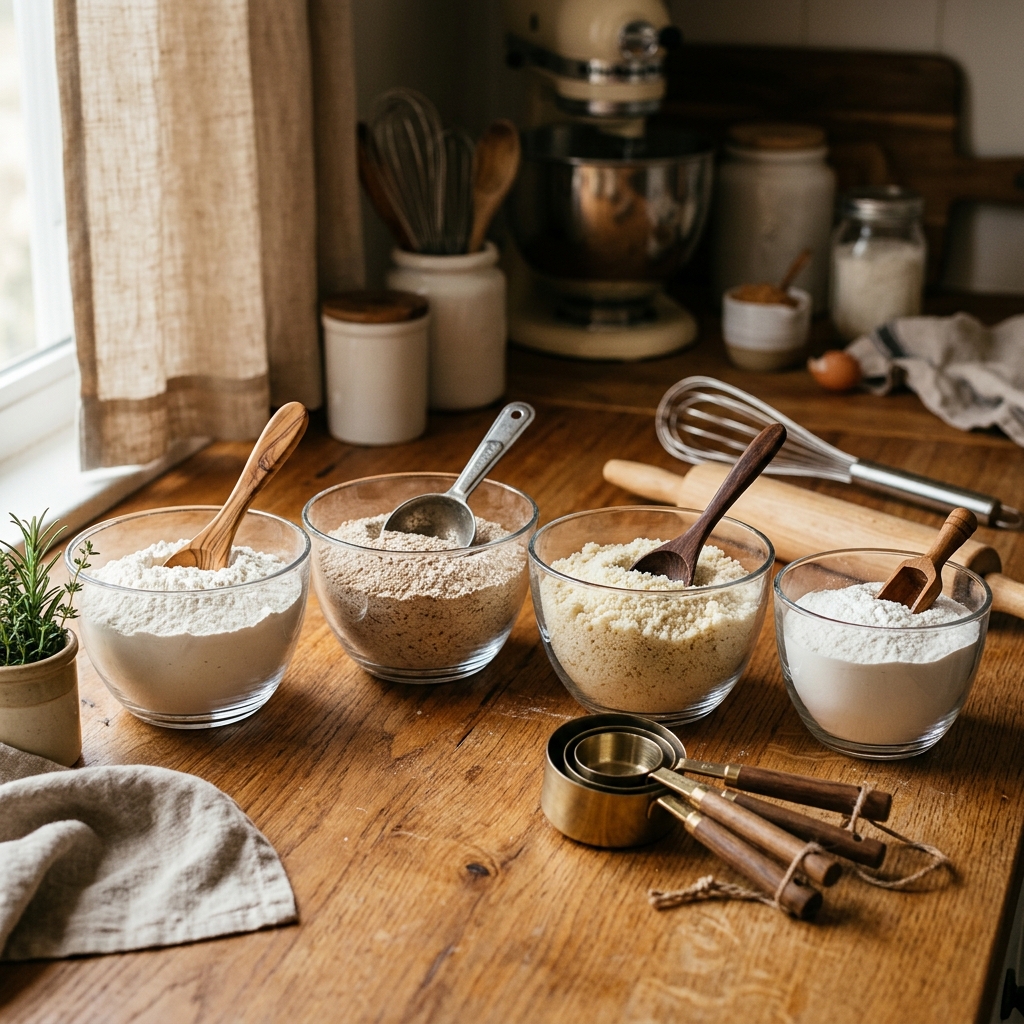
Not All Flour Is Created Equal
When a recipe says “2 cups of flour,” which flour does it mean? The answer matters more than you think. Different flours have dramatically different densities:
| Flour Type | Grams per Cup |
|---|---|
| All-Purpose Flour | 120g |
| Bread Flour | 120g |
| Cake Flour | 114g |
| Pastry Flour | 106g |
| Whole Wheat Flour | 113g |
| Almond Flour | 96g |
| Coconut Flour | 128g |
| Rye Flour | 102g |
The Spoon-and-Level Method
For the most consistent results when measuring flour by cups:
- Fluff the flour in its container with a spoon
- Spoon flour into the measuring cup until overflowing
- Level the top with a straight edge (back of a knife)
This gives you approximately 120g per cup for all-purpose flour — the standard professional measurement.
Why Scooping Is Bad
When you dip your measuring cup directly into the flour bag and scoop, you compress the flour. This can give you 140g per cup instead of 120g — that’s 17% more flour than intended! Over a recipe calling for 3 cups, that’s an extra 60g of flour, which can turn your fluffy cake into a dense brick.
Quick Reference
- 100g flour = 0.83 cups
- 150g flour = 1.25 cups
- 200g flour = 1.67 cups
- 250g flour = 2.08 cups
- 300g flour = 2.5 cups
- 500g flour = 4.17 cups